
Vinyl Fencing in Chico, CA
Privacy, picket and rail fences that never need paint or stain.
Some people love the look of an old redwood fence. Others just want a fence they never have to think about again. That second group is who vinyl is for. A vinyl fence doesn't rot, doesn't splinter, doesn't need a coat of stain every few summers, and cleans up with a garden hose. That makes it a favorite for busy families, for landlords with rentals near Chico State who can't be out sealing boards every few years, and for anyone tired of replacing gray, cracked pickets. It costs more up front than wood, usually around $30 to $55 per foot for a 6-foot privacy fence, but over 20 years or more the savings on upkeep close a lot of that gap. We install vinyl all over Chico and as far north as Orland, where wide-open lots and long property lines make low upkeep worth even more.
Below you'll find what to look for in a good vinyl fence, how our valley heat affects it, the styles we install most, and how an installation goes. If you still like the warmth of real wood, our wood fence installation page covers that side of the choice.
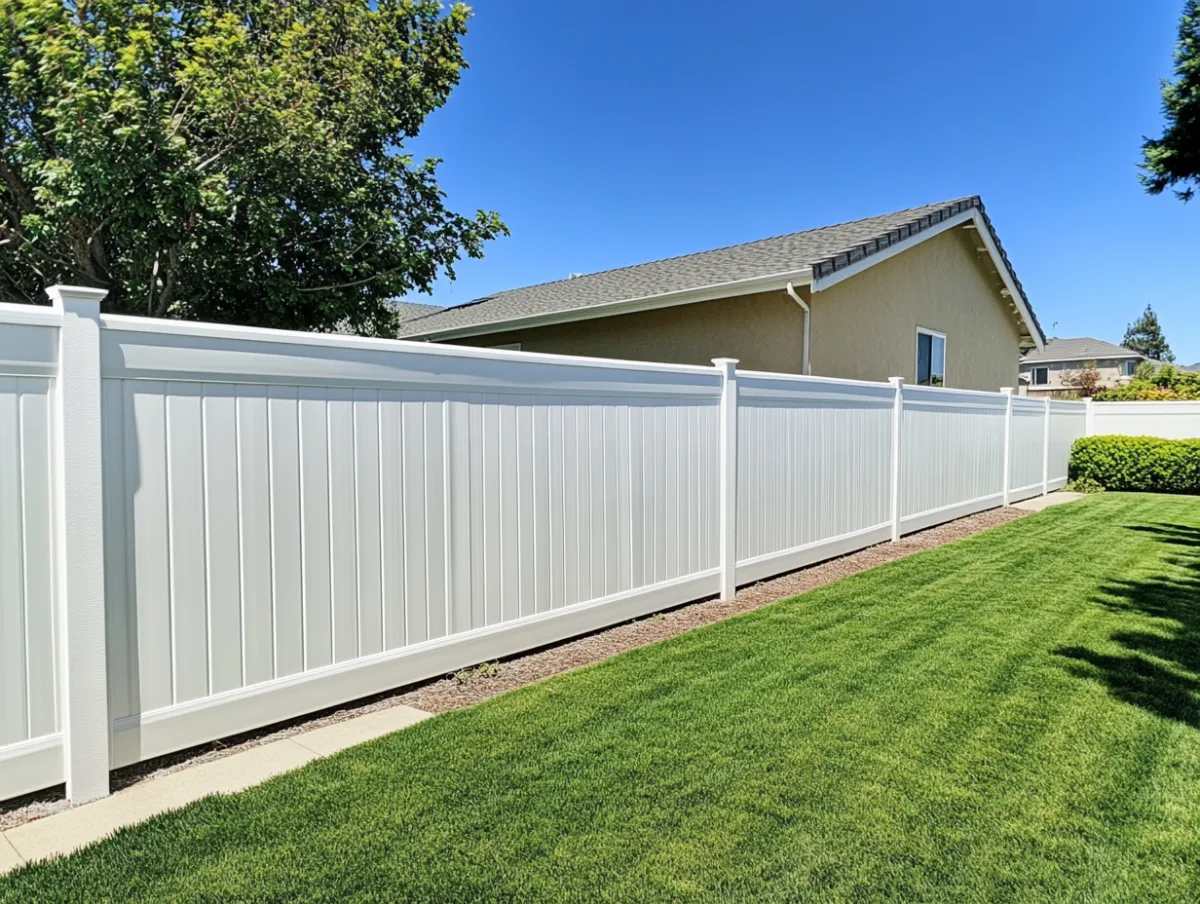
Not All Vinyl Is the Same
Cheap vinyl and good vinyl can look alike on day one. The difference shows up a few summers later. Better vinyl uses thicker walls, so panels don't flex or bow when you lean on them, and it's made with UV protection mixed all the way through, so the color holds instead of yellowing or turning chalky in the sun. Strong systems also have rails with a metal stiffener inside, or a shape that keeps them from sagging over long spans. When we quote a vinyl fence, we tell you exactly which product we're using and what its warranty covers, so you can compare it fairly against other bids. A good rule: ask any installer for the wall thickness and the warranty in writing. If they can't tell you either one, that's a sign the material is on the thin end. A quality vinyl fence installed the right way should look about the same in year fifteen as it did the week it went in.
Vinyl and Chico Summers
Vinyl grows a little when it's hot and shrinks when it's cool. That's normal, and a well-built fence is designed for it, with rails that sit loosely enough in the posts to move without cracking or popping out. Where it goes wrong is when an installer forces panels in tight in the spring and the fence buckles in a July heat wave. Color matters too. White, tan and light gray stay coolest under a hundred-degree sun. Darker colors absorb more heat, so we're careful about where and how we use them. And because Chico's clay soil moves between wet and dry seasons, we set every vinyl post in concrete at full depth so the fence stays straight and the panels stay square. Wind is the other test. A solid vinyl fence catches the north wind like a sail, so on open lots we use heavier posts and add bracing where needed.
Vinyl Styles We Install
- Solid privacy: tongue-and-groove panels with no gaps, usually 6 feet tall. The most popular choice for backyards.
- Semi-privacy: small gaps or a lattice top, so you get privacy with a bit of airflow and light.
- Picket: a classic front-yard fence that stays bright white without paint, and fits the city of Chico's front-yard height limits.
- Ranch rail: two or three horizontal rails, often used to mark a property line or a pasture on bigger lots.
- Gates: matching vinyl walk gates and drive gates, built with a steel frame inside so they don't sag.
If you're in a neighborhood with an HOA, vinyl is often one of the approved materials, but colors and heights are usually spelled out in the rules. Send us the guidelines and we'll quote a fence that fits them, so there are no surprises after it's built.
How a Vinyl Installation Goes
- We measure, walk you through colors and styles, and give you a written price.
- Underground utilities get marked through USA North 811 before any digging.
- We remove and haul away the old fence if you have one.
- We set posts in concrete, checking every one for height and plumb.
- Rails and panels go in with room to expand and contract, then caps go on top.
- Gates go in last, and we adjust them until they latch every time.
Most vinyl fences take one to three days, depending on length and the number of gates. Afterward, a rinse with the hose, or mild soap and a soft brush once or twice a year, is all the care it needs.
Looking for something tougher and lower cost for a dog run or side yard? Chain link fencing might be the better fit.