
Fence Repair in Chico, CA
Wind damage, leaning posts, rotted rails and broken boards, fixed for the long haul.
The calls tend to come in waves. A dry north wind blows through the valley for a day or two, and by the weekend we're looking at fence sections lying flat across side yards all over Chico. Sometimes it's one bad post that finally gave up. Other times it's a whole run that was leaning for years and just needed a push. We see the same thing after the first big storms of the winter, when soaked ground lets posts tip. Out in Oroville, where a lot of fences sit on open lots with nothing to block the wind, it happens even faster. The good news: a fence that falls doesn't automatically need replacing. Most of the time the boards are fine, and what failed is a post, a rail, or the hardware holding them together.
This page walks through what wind and weather damage looks like up close, how a post actually gets reset so it stays put, how a repair goes from the first call to the last post, and how California's shared fence law works when the fence sits on the property line. If the trouble is a gate that sags or won't latch, our gate repair service covers that in more detail.
What Wind and Storm Damage Looks Like
After a windstorm, the obvious damage is the section that's down. The quieter damage is just as important. Walk the whole fence and look for posts that have rocked loose in their holes, leaving a gap in the dirt around the base. Look for rails that have pulled their nails or screws partly out of the post. Check for boards that are cracked at the bottom, where the wind pushed them against a rail. A fence that took a hard hit often leans a few degrees toward the street or the neighbor without falling, and that lean only gets worse with the next storm. If a tree limb came down on it, check the rails on either side of the impact too. They usually crack well past the spot that got hit.
How a Post Gets Reset So It Stays
A fence is only as strong as its posts, and a post is only as strong as what's holding it in the ground. A good rule of thumb is that about a third of the post's length belongs underground, so a 6-foot fence needs posts set roughly 2 to 3 feet deep. When we reset a post, we dig out the old footing completely, set a new rot-resistant post at the right depth, and pour concrete that's shaped to slope away from the wood, so rain runs off instead of pooling. When the old post is sound above ground but rotted at the base, a steel post repair spike driven next to it can sometimes save the post without digging. We'll tell you which one your fence needs. Soil matters here too. Much of the Chico area sits on heavy clay that swells when it's wet and shrinks and cracks when it dries, which slowly works posts loose year after year. In those spots we dig a little deeper and wider, and we add gravel at the bottom of the hole so water drains away from the end of the post instead of sitting against it all winter.
Our Repair Process, Step by Step
- You call or send a photo, and we set a time to come out.
- We walk the full fence line, not just the broken part, and mark anything that's close to failing.
- You get a written price for the repair, with any extra work listed separately so you can choose.
- We do the work, usually in a few hours to a day. That can mean resetting posts, replacing rails, swapping cracked boards, or re-securing the whole run with new hardware.
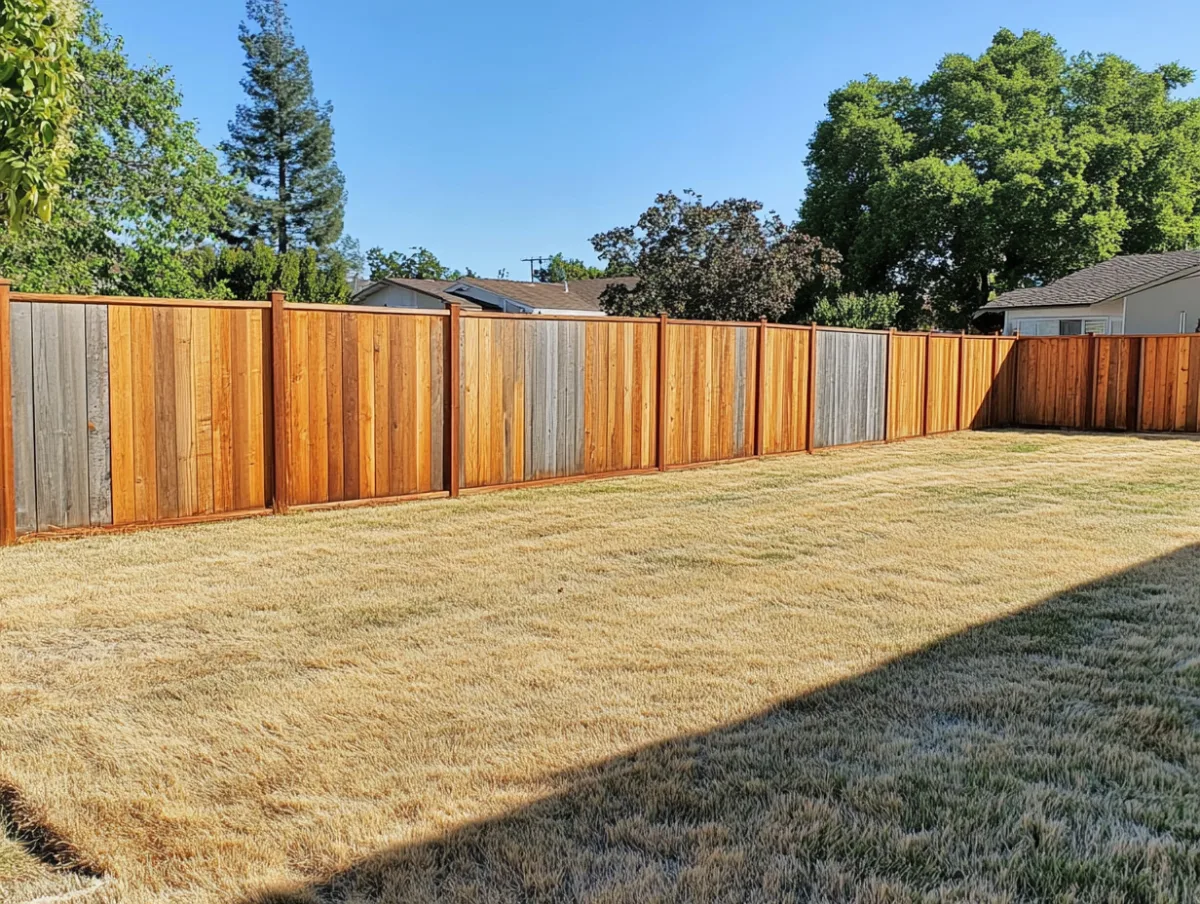
- We match the new wood to the old as closely as we can. Fresh redwood looks orange next to weathered gray boards at first, but it fades within a season or two.
- We clean up and haul away the broken wood.
Shared Fences and California's Good Neighbor Law
If the fence sits on the line between you and a neighbor, you're probably not paying for it alone. Under California Civil Code Section 841, neighbors are presumed to share responsibility for a boundary fence equally. To ask a neighbor to split the cost of a repair or replacement, the law requires giving them written notice at least 30 days before the work starts, with a description of the problem, the proposed fix, the cost and how it will be split. There are exceptions, so for anything unusual it's worth a quick talk with a real estate attorney. We're happy to put the repair price in writing so you can share it with your neighbor.
And if the old fence is past saving, here's how we handle a new wood fence from layout to final post cap, including on the larger lots around Durham.