
Chain Link Fencing in Chico, CA
Strong, affordable fencing for yards, dog runs, pools and commercial lots.
Chain link doesn't get much love, but it's one of the hardest-working fences around. It's usually the least expensive fence per foot, often around $5 to $15 per foot installed, it goes up fast, and it lasts for decades with almost no care. It keeps dogs in and kids safe, it lets breezes through on hot days, and it doesn't block the view across a backyard or an orchard. That's why you see it everywhere in Butte County, from side yards in Chico to farm properties around Gridley and shops and storage yards in Oroville. And it doesn't have to look industrial anymore. Black vinyl-coated chain link blends into landscaping in a way plain silver never did, and privacy slats can turn an open fence into a screen. For homeowners who just need a safe, solid boundary for kids or pets, it's hard to beat the value.
This page covers how to choose the right chain link, the add-ons people ask about most, what we can fix on an older fence without tearing it out, and how an installation goes. If you need full privacy without slats, take a look at vinyl fencing instead. And if you already have chain link that's bent, sagging or torn, skip down to the repair section first. There's a good chance it can be saved.
Choosing the Right Chain Link
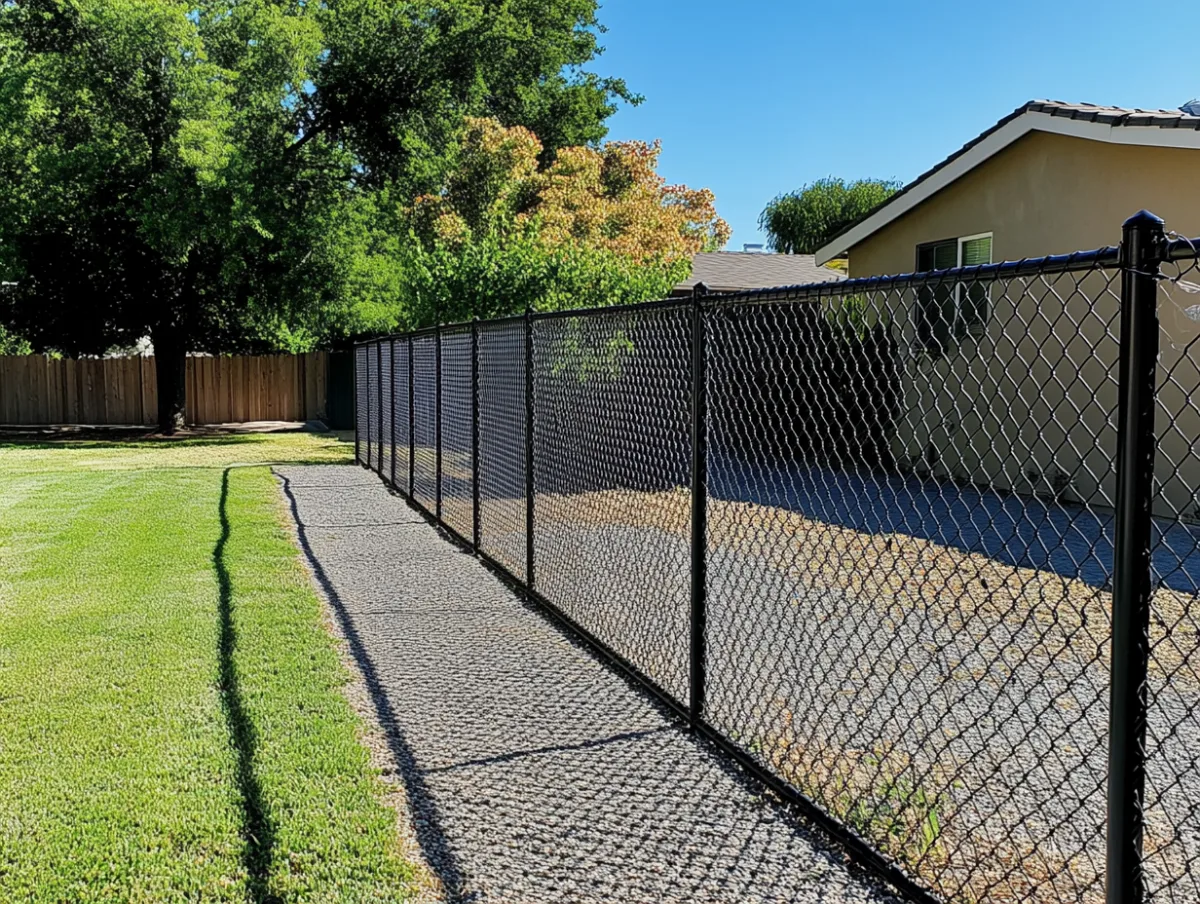
Three things decide how strong a chain link fence is. First is the wire thickness, called gauge. The lower the number, the thicker the wire, so 9-gauge is sturdier than 11-gauge and is a good choice for most homes. Second is the coating. Standard galvanized wire is silver and resists rust well. Vinyl-coated wire, usually black or green, adds another layer of protection and looks a lot better next to a lawn or garden. Third is the framework: the posts and the top rail. Heavier posts and a full top rail keep the fabric tight and stop the fence from bending when a dog jumps on it or someone leans on it. We'll match all three to how you plan to use the fence. Height matters too. A 4-foot fence is the common choice for front and side yards and most family dogs. Bigger dogs, jumpers and anything you want to keep secure usually call for 5 or 6 feet.
Popular Add-Ons
- Privacy slats: strips woven through the mesh that block most of the view. They come in many colors and are a low-cost way to add privacy.
- Bottom tension wire: a wire along the bottom that keeps the fabric tight and makes it harder for dogs to push under.
- Walk gates and drive gates: single gates for foot traffic and wide double gates or rolling gates for trucks, trailers and equipment.
- Taller fencing: 6-foot and 8-foot fences for dog runs, sport courts and commercial security.
- Pool fencing: chain link can enclose a pool, but pool barriers have their own height, gap and self-closing gate rules, so we check those before we build.
Chain Link Repair
One of the best things about chain link is that almost every part can be fixed on its own. A bent top rail from a fallen branch can be cut out and replaced in a few hours. Fabric that's sagging or pulled loose can be stretched back tight and re-tied. A torn section can be cut out and patched with new mesh that's woven right into the old. Leaning posts can be reset in new concrete, and a gate that drags can be rehung with new hinges and a new latch. In most cases a repair costs a small fraction of a new fence, and it can keep an older fence going for many more years. We'll look at the whole fence while we're there and let you know honestly whether the rest of it has plenty of life left or is close to needing a full replacement.
How a Chain Link Installation Goes
- We measure, talk through height, coating and gates, and give you a written price.
- Utilities get marked through USA North 811 before we dig.
- We set end, corner and gate posts in concrete first, since they carry the most tension.
- Line posts go in between, followed by the top rail.
- We stretch the fabric tight from end to end and tie it to every post and rail.
- Gates go in and get adjusted, then we add slats or other extras and clean up.
Most chain link jobs take a day or two. If you aren't sure exactly where your property line is, it's worth finding your survey markers or plat map before we set posts, especially on rural parcels where old fences don't always follow the real line.
Need a fence for horses, livestock or a large rural property? See our ranch and farm fencing options.