
Ranch and Farm Fencing in Butte County
Field fence, horse fence and post and rail, built for long runs and real animals.
Fencing a backyard and fencing ten acres are two different jobs. On a farm or ranch, the fence has to hold back animals that lean, rub, push and sometimes run straight into it. It has to stretch across uneven ground, cross ditches and low spots, and stay tight for years through summer heat and winter mud. Butte County has a lot of this kind of land, from horse properties and small pastures around Durham to orchards, row crops and grazing ground up toward Orland in Glenn County. Whether you're fencing in a few goats, a couple of horses or a whole herd, the right fence depends on the animal, the ground and how much pressure the fence will take.
Below we cover the main types of farm fence, why the corners matter more than anything else, how we fence for horses in particular, and how a big job gets planned and built. For the gates that go with it, see our gates and gate repair page.
Choosing the Right Farm Fence
- Woven field fence: wire in a grid, with smaller openings near the bottom. A solid, all-around choice for cattle, sheep and goats.
- No-climb horse fence: tight 2-by-4-inch openings that hooves can't slip through. The safest wire option for horses.
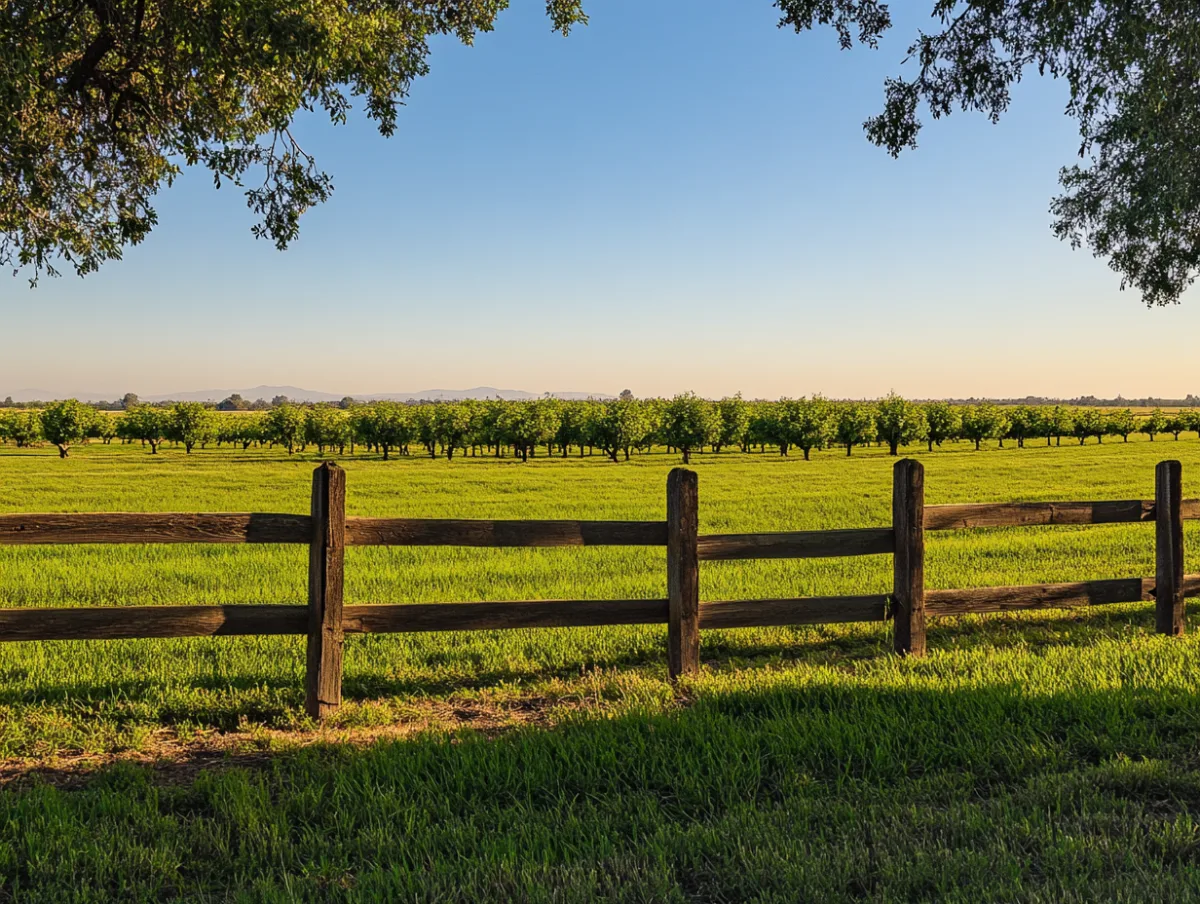
- Wood post and rail: two to four horizontal rails between wood posts. Looks great along a driveway or around a house and holds horses well, often paired with wire or a hot wire on the inside.
- Barbed wire: low cost and common for cattle on large acreage, but not a good choice around horses, which can be badly cut if they run into it.
- Deer fence: tall mesh, usually 7 to 8 feet, to keep deer out of orchards, vineyards and big gardens.
We'll ask what you're keeping in or out, then recommend the fence that does that job for the least money. On many properties the best answer is a mix: post and rail where people see it from the road, and woven wire or no-climb on the back pastures where looks matter less than strength.
Strong Corners Make a Strong Fence
A wire fence is basically a long rope pulled tight between two anchors. The anchors are the corner and end posts, and if they move even a little, the whole run goes slack. That's why we build braced corners, often called H-braces: two heavy posts set deep in the ground, joined by a horizontal brace and a tightened diagonal wire that locks them together. Gate openings and long straight runs get the same treatment. Between the corners, line posts hold the wire up. We use a mix of wood posts and steel T-posts, depending on the animal and the budget, and we space them closer on rough ground or where animals crowd. Built this way, a fence can be stretched tight once and stay that way for years. Skip the bracing to save money, and you'll usually pay for it later in sagging wire and repairs.
Fencing for Horses
Horses are harder on a fence than most animals, and they're easier to hurt. They lean over fences to graze, chew on wood rails, rub against posts and sometimes spook and run into a fence at full speed. So a horse fence needs to be tall, usually 4.5 to 5 feet, easy for the horse to see, and free of sharp edges or openings where a hoof can get caught. No-climb wire with a wood top rail or a sight board is a popular setup, since the board makes the fence easy to see and keeps horses from leaning on the wire. A strand of electric wire along the inside can stop chewing and leaning. We also keep posts on the outside of the fence line where we can, so horses don't rub on them.
How a Farm Fencing Job Goes
- We walk the property with you, mark the lines, gates and corners, and talk about the animals.
- You get a written price, broken down by fence type and gates, so you can phase a big job if needed.
- Utilities are marked through USA North 811, and we clear brush along the line if needed.
- We set and brace the corners and ends first.
- Line posts go in, then the wire is stretched tight and fastened to every post.
- Gates go in last, hung level so they swing clear of the ground.
A few hundred feet can take a day or two. Long runs across many acres take longer, and we'll give you a clear schedule before we start. If animals are already on the property, we plan the work in sections, so there's always a closed pasture for them while the new fence goes in.
Fencing the yard around the house too? Our wood fence installation work pairs well with a ranch fence on the rest of the property.